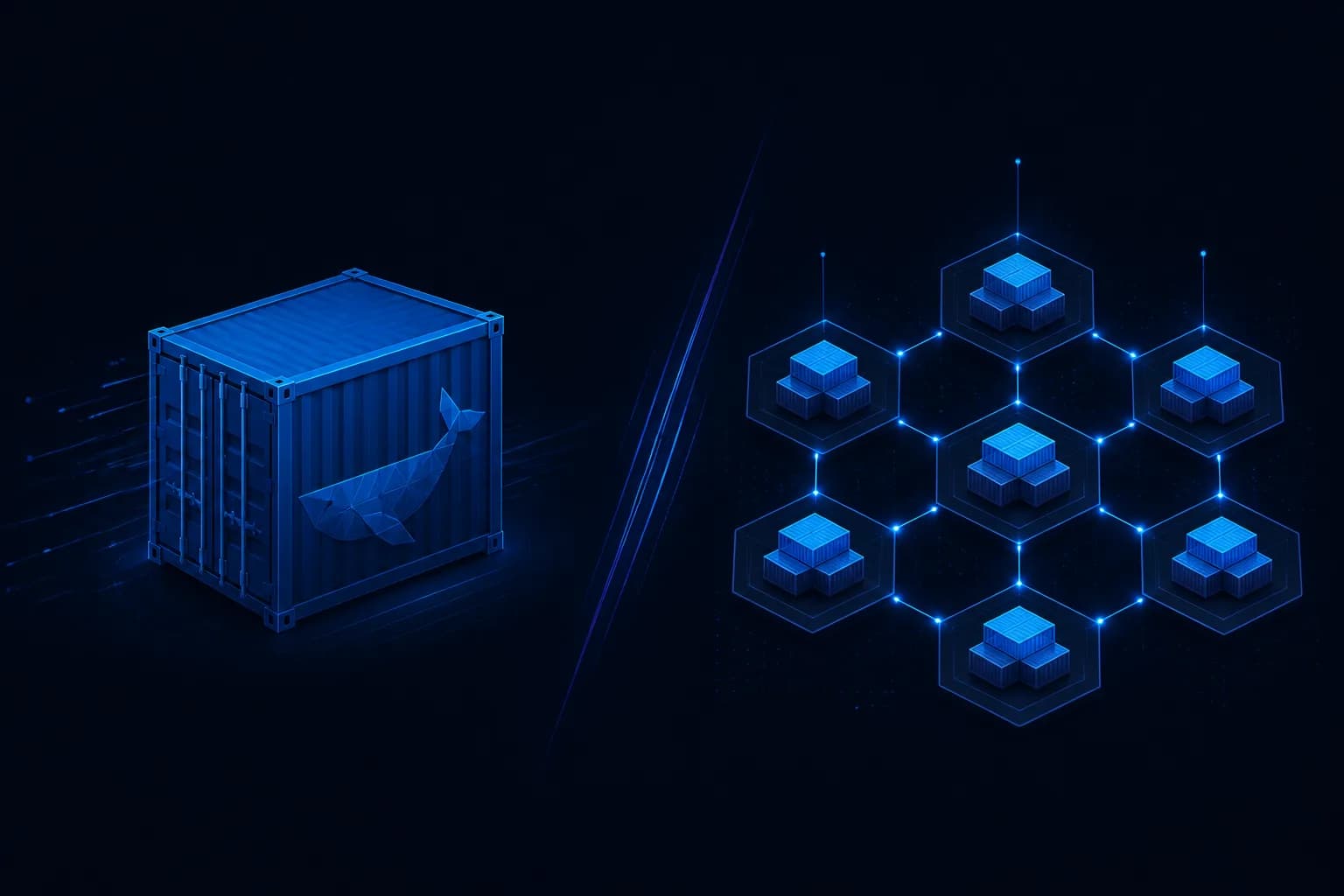
Docker vs Kubernetes is one of the most searched DevOps questions - and one of the easiest ways for a startup to waste six months.
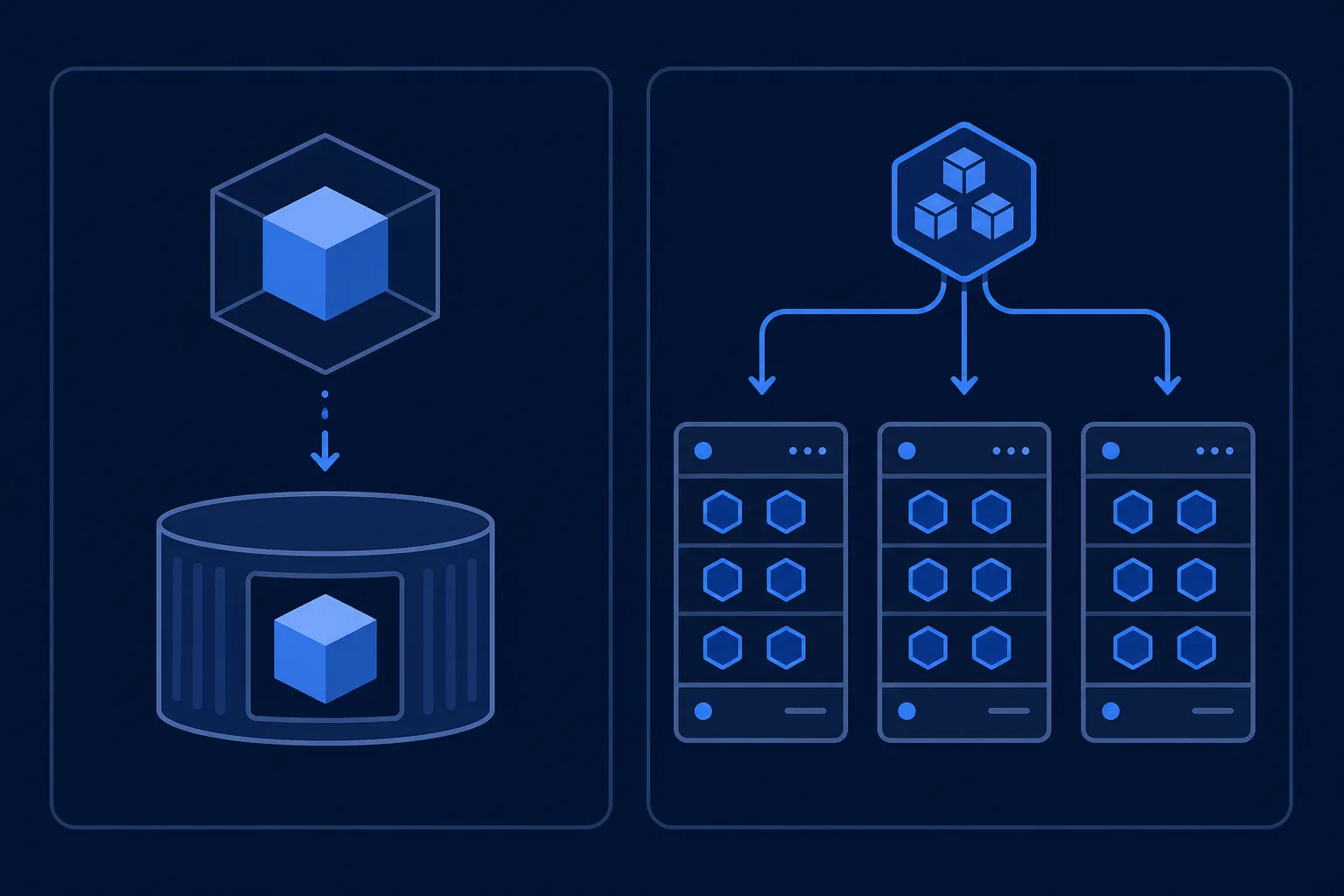
Docker packages your app so it runs the same on a laptop and in the cloud. Kubernetes orchestrates many containers across machines: scheduling, rolling deploys, service discovery, autoscaling. Most early products need the first. Far fewer need the second on day one.
This guide is for founders and eng leads choosing infrastructure after an MVP - especially if you already followed a boring AWS DevOps baseline.
Docker vs Kubernetes: The One-Line Difference
| Docker | Kubernetes (K8s) | |
|---|---|---|
| Job | Build and run containers | Run and manage many containers in production |
| Unit you care about | Image + container | Cluster, pods, services, deployments |
| Day-one startup fit | Almost always yes | Often no |
| Typical ops cost | Low-medium | Medium-high (people + complexity) |
| Managed alternatives | App platforms, single VM + Compose | EKS, GKE, AKS, or skip K8s for ECS/Cloud Run |
Docker answers: "How do I ship a reproducible runtime?" Kubernetes answers: "How do I operate dozens of services with self-healing and scale?"
If you only have one or two services and a few thousand users, Kubernetes is usually optional complexity.
What Docker Solves for Startups
A Dockerfile turns "works on my machine" into an artifact CI can build and any host can run.
You gain
- Same Node/Python/Java version in staging and prod
- Cleaner onboarding (clone →
docker compose up) - Portable deploys to a VM, ECS, Cloud Run, Fly, Railway, or a PaaS
You still need
- CI to build and push images
- Secrets outside the image
- Health checks, logs, and backups (Docker does not replace ops)
Minimum viable container setup:
- Multi-stage
Dockerfile(small final image) docker-compose.ymlfor local API + Postgres/Redis- Image registry (GHCR, ECR, Docker Hub)
- Deploy to one managed runner (see below)
For turning a docker run into Compose locally, Myrafy's free Docker Run → Compose tool is a handy sketchpad - review the output before production.
What Kubernetes Adds (and Costs)
Kubernetes shines when you have:
- Many microservices that must discover each other
- Strict rolling updates / canaries across a fleet
- Heterogeneous workloads (API, workers, GPU jobs) on shared nodes
- A platform team that already knows K8s
You pay with
- Control plane concepts: pods, deployments, services, ingress, ConfigMaps, RBAC
- Debugging that spans YAML, networking, and IAM
- Cluster upgrades and node capacity planning
- Higher AWS/GCP bills if you oversize the cluster "just in case"
Managed Kubernetes (EKS/GKE/AKS) removes some undifferentiated heavy lifting. It does not remove the need for someone who understands the system when it breaks at 2 a.m.
Decision Table: What Should a Startup Use?
| Stage | Recommended default | Skip for now |
|---|---|---|
| Prototype / pre-PMF | Dockerfile + Compose locally; PaaS (Vercel/Railway) or one small VM | EKS "because LinkedIn" |
| Early production | Containers on ECS Fargate, Cloud Run, or App Runner | Self-managed K8s |
| Multi-service, clear traffic | Managed containers + queues/workers | DIY cluster |
| Platform team + many services | Managed Kubernetes (EKS/GKE) | Premature service mesh |
Rule of thumb: adopt Kubernetes when container sprawl and release risk hurt more than learning K8s - not when a blog post said cloud-native requires it.
Managed Paths That Are Not Kubernetes
You can stay "Docker-native" without a cluster:
- AWS ECS / Fargate - run images with task definitions; pairs well with the AWS startup baseline
- Google Cloud Run - request-scaled containers, simple ops
- Azure Container Apps - similar idea on Azure
- Fly.io / Railway / Render - speed over control
These give you container packaging with far less orchestration surface area.
Common Mistakes
- Learning K8s before shipping a Dockerfile - reverse the order
- One pod = one VM mentality - then wondering why the bill and toil exploded
- No resource requests/limits - noisy neighbors and OOM kills
- Secrets in images - rotate into Secrets Manager / SSM
- Skipping staging - first
kubectl applyin prod is not a culture
A Sensible 90-Day Plan
Days 1-14: Dockerfile + Compose; CI builds images on every main merge Days 15-45: Deploy the same image to staging/prod on ECS Fargate or Cloud Run; add health checks and log drains Days 45-90: Split workers if needed; add autoscaling on the managed service Later: Revisit Kubernetes only if service count, tenancy, or scheduling needs outgrow the managed container product
For infrastructure-as-code, Terraform remains a strong fit whether you target ECS or EKS - see our upcoming Terraform AWS guide in the technical blog queue, and today's cost context in custom software development cost 2026.
FAQ: Docker vs Kubernetes
Do I need both Docker and Kubernetes? You almost always need container images (Docker or BuildPacks/OCI). You only need Kubernetes when you need that style of orchestration.
Is Docker Compose enough for production? Compose is excellent for local and small single-host setups. For production SaaS, prefer a managed container service with health checks and rolling deploys.
When is Kubernetes the right call for a startup? Multi-team platforms, many services, GPU/batch mix, or regulatory setups that already standardize on K8s. Not "we have an MVP API and a marketing site."
Will skipping Kubernetes hurt hiring? Good engineers care that you can ship safely. A clean ECS/Cloud Run setup beats a half-broken EKS cluster on a resume and in production.
The Bottom Line
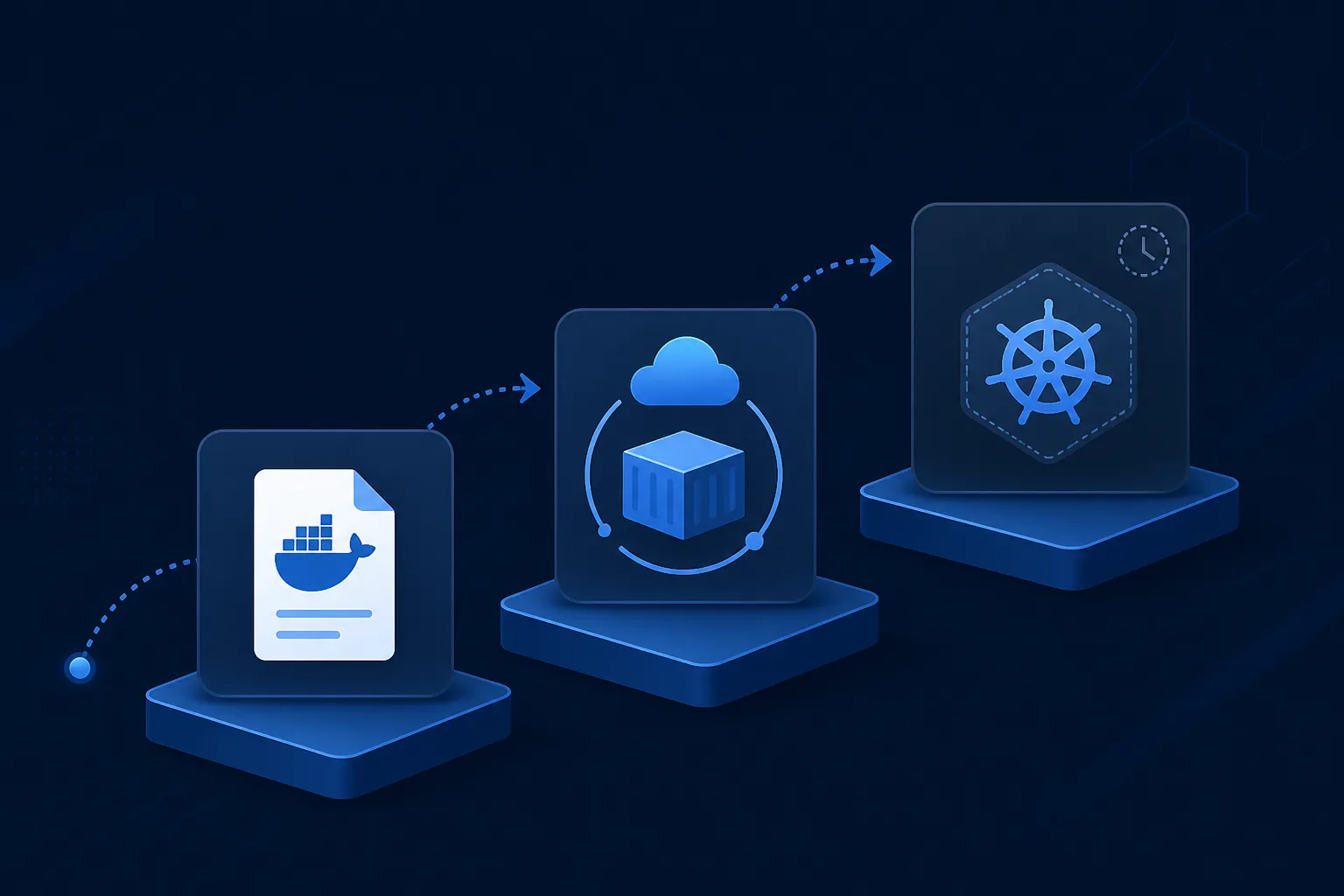
Docker vs Kubernetes is not a rivalry - it is a sequence. Start with Docker (reproducible images). Run them on a managed container platform. Reach for Kubernetes when orchestration problems are real, not aspirational.
Boring infrastructure that deploys every day beats fashionable YAML that nobody can debug.
Need a containerized AWS/GCP baseline without premature Kubernetes? See Myrafy cloud & DevOps services or contact us for an estimate.