
India produces a large engineering graduating class each year and is one of the world's deepest software talent pools. For startups, product companies, and SMBs, engaging engineers in India can mean senior delivery at rates below a US or EU agency bench.
The mistake is treating that as a marketplace gig. A company contract with a written statement of work, weekly demos, and IP in your repository is the model that survives staff changes, procurement, and a year of product work.
Why India for Software Development?
The cost advantage is real. A senior full-stack engineer in India typically bills in a lower band than a US contractor at $120-$200/hour. Rate arbitrage is only part of the story.
The technical depth is real. Engineers in Noida, Bangalore, Pune, and Hyderabad ship across the stacks used in finance, healthcare, and SaaS. Time zone overlap is workable: IST (UTC+5:30) covers UK and EU mornings and a late window with US East Coast teams. Async-first rituals cover the rest.
What to Look For (Beyond the CV)
A polished portfolio and a GitHub profile full of green squares are encouraging but not sufficient.
1. Ownership over contribution. Ask the people who will write the code to walk through a system they owned end-to-end. Senior engineers describe trade-offs. Junior engineers describe tickets.
2. Communication quality. Clear replies during screening become clear commit messages and status notes. Treat that as a proxy for engineering quality.
3. Problem decomposition. Give a vague requirement ("we need to let users export their data") and listen to how they clarify and cut scope before they write code.
4. Named people on the SOW. Ask who is assigned, who covers leave, and who owns architecture. A company that cannot name the team is selling a bench, not a delivery.
Where to Find Reliable Partners in India
Marketplaces (Upwork and similar) are useful for a short paid trial when you already have a tight spec. They are noisy. Filter for recent production work, not 2019 demos.
LinkedIn is underused for company-to-company intros. A specific brief beats a generic "open to opportunities" ping.
Direct referrals from founders you trust still yield the cleanest first conversations.
Software companies (Myrafy's model) sit between a solo contractor and a large SI: senior engineers on the engagement, a direct contract, a written SOW, and full IP on handover. That is usually the better fit for product work than a single profile bid.
Red Flags to Watch For
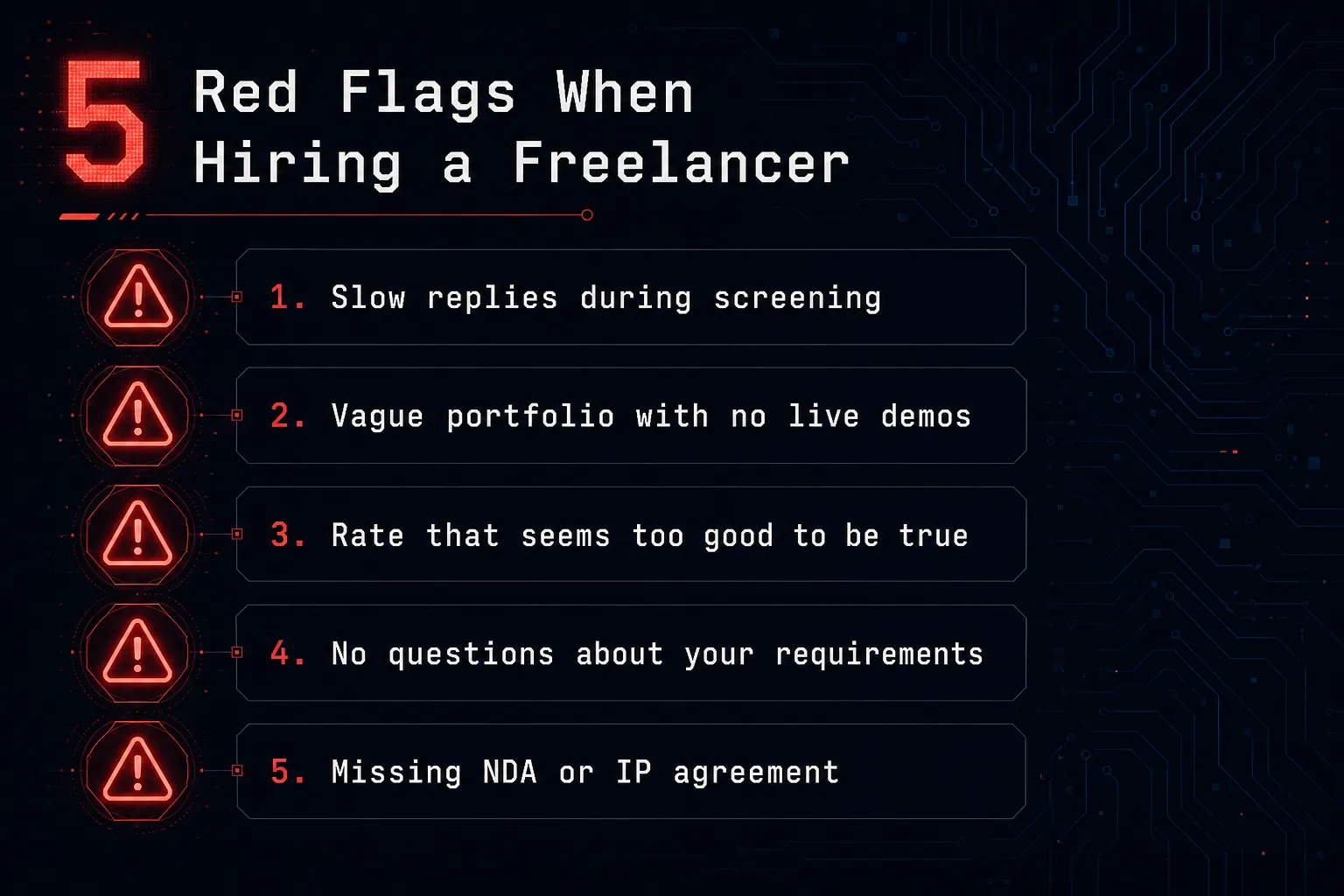
- Vague answers about past work - "we built a banking app" with no specifics often means thin involvement. The truth is in the details.
- Rates that seem too good - An engineer at $10/hour for full-stack work is usually junior, subcontracting, or padding hours.
- Slow communication during screening - Response quality in hiring is the response quality you will get on the project.
- No questions about your requirements - Teams that agree to everything without probing are hoping, not designing.
- Missing IP language - If the contract does not assign source and IP to you on payment, stop.
How to Structure the Engagement
Start with paid discovery. Pay for a short sprint that produces a scoping document, architecture sketch, and milestone plan before you commit the full build. You get a real deliverable and a read on how the team handles ambiguity.
Use milestone-based contracts. Break work into chunks you can accept: design, working API, frontend integration, QA, deploy. Pay on delivery.
Sign an NDA and IP assignment. Before technical discussion, have a mutual NDA. The SOW should assign IP and source to you when the milestone closes. Do not assume.
Give goals, not a ticket dump. Share business constraints. Senior engineers should help shape the solution.
What Should You Pay?
Rates vary by seniority, stack, and whether you buy a company pod or a lone contractor:
| Level | Typical hourly range (USD) |
|---|---|
| Junior (0-3 years) | $12-$25 |
| Mid-level (3-6 years) | $25-$50 |
| Senior (6-12 years) | $50-$80 |
| Specialist / architect (12+ years) | $80-$120+ |
Fixed-scope work for a quality MVP typically sits in the $5,000 to $25,000 range depending on complexity. Quotes below $2,500 for a full product almost always hide scope cuts or junior execution.
A company blended rate is often higher than a solo contractor and lower than a branded agency. You are paying for continuity, a named backup, and a contract that procurement can sign.
The Bottom Line
Hiring software engineers in India can be one of the best investments a product team makes, or one of the most frustrating if you skip the SOW. Screen for ownership, start with paid discovery, put IP in writing, and prefer a company contract over a marketplace gig when the work has to last.
If you are weighing a contractor against a company or a large agency, see Freelance vs Agency vs Software Company. For budget planning, read How Much Does Custom Software Development Cost in 2026?.
Need a written estimate from a software company in Noida? Explore Myrafy services or contact us for a free estimate — typically within one business day.